Elderly scam victims face limited protection from banks
While some laws address elder abuse and financial fraud, gaps in regulations leave many seniors vulnerable.
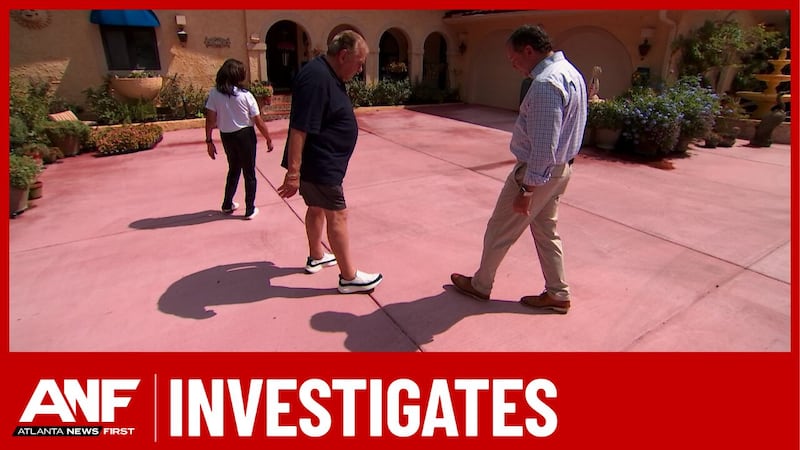
ATLANTA, Ga. (Atlanta News First) - At 93, Loris Sinanian is an FBI statistic, one of 100,000 seniors victimized by financial scams every year.
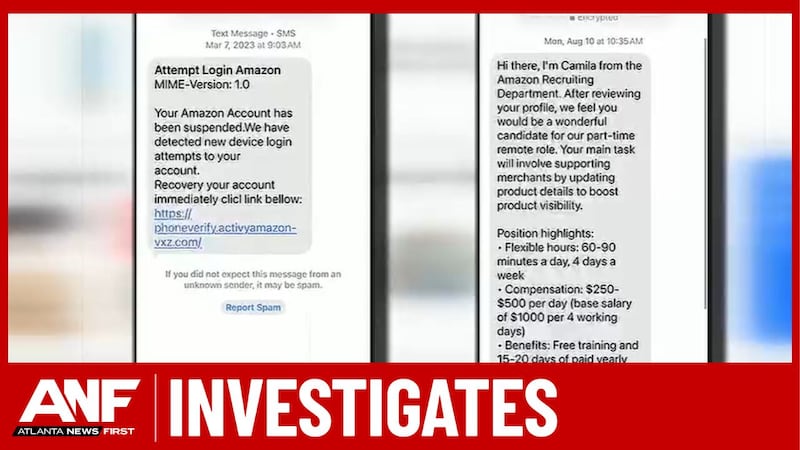
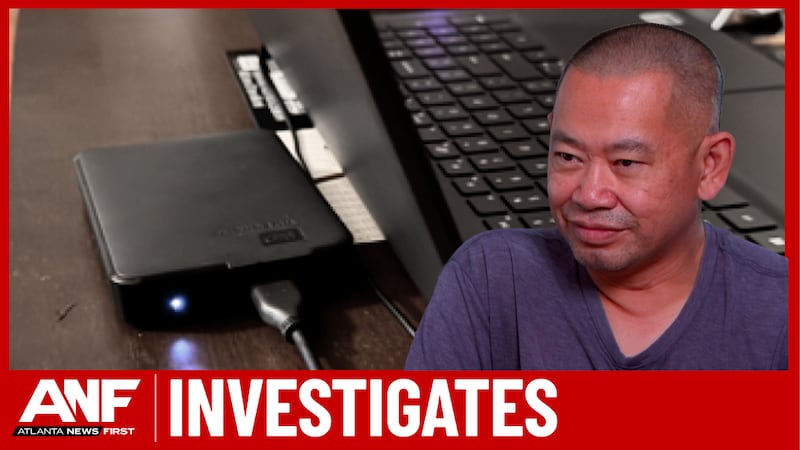
The con artist behind his case convinced the Blairsville, Georgia, resident he was an old friend who owed a $100 debt. Without realizing what he had done, Sinanian gave the scammer remote access to his computer.
From there, the scammer made it appear that he mistakenly deposited $100,000 into Sinanian’s bank account instead of $100 and the overpayment needed to be returned. Over the next 10 days, the scammer persuaded Sinanian to withdraw $109,000 from his bank and stuff cash payments into boxes of books. He shipped the boxes to an address in New York.
“I don’t want to use profanities, but I was very unhappy I was stupid enough to continue,” Sinanian said.
Unfortunately, elder exploitation cases like Sinanian’s are not rare. According to Debra Stokes, executive director of the Georgia Council on Aging, a state-funded senior advocacy group, “there are hundreds of cases like that across the county,” and thousands of reported cases statewide annually.”

In 2023 alone, seniors lost $3.4 billion to scams, a figure reported by the FBI that likely underrepresents the full scale of the issue. While Georgia law requires banks to train employees to recognize and prevent scams, it doesn’t allow or require them to stop transactions.
In 2023, Georgia lawmakers passed the Senior Protections from Exploitation Against Retirees (SPEAR) Act, empowering the Georgia Secretary of State’s Office to delay suspicious financial transactions for up to 25 days. According to Gabe Sterling, chief operating officer for the secretary of state, the law has been used more than 550 times since it was passed.
“This law provides the tools we needed to address fraud in financial institutions we regulate, like financial advisors and stockbrokers,” Sterling said. “The industry came to us and said, ‘We need to have a structure in place to do this reporting because we can see it, but if our client is telling us to do it, we have to.’ ”
But the SPEAR Act does not require banks to do the same because most banks and credit unions are under federal regulation.
Stokes said the proposal for federal oversight has not gone far enough.
“We talked to the U.S. Securities and Exchange Commission about how do we address elder exploitation at the bank level, and we didn’t get any traction,” she said. “Not yet anyway, and maybe we’re not asking the right questions.”
Congress is considering the Protecting Consumers from Payment Scams Act, which would hold banks liable for fraudulent transactions. Banking trade groups, however, oppose the bill, arguing it unfairly shifts responsibility to financial institutions.
While police intercepted one shipment of Sinanian’s money totaling $37,000, he still lost $72,000. His family lawyer cited another Georgia law requiring banks to notify police and the Georgia Division of Aging Services if they suspect a scam.
United Community Bank said it had no reason to believe Sinanian was being exploited.
The fight against elder fraud continues, but as lawmakers debate new protections, many seniors remain vulnerable. Advocates urge both state and federal leaders to strengthen safeguards for the nation’s elderly.
These banks are offering these resources to help educate and prevent scams among their elderly customers:
Chase Bank
Capital One
- Elder Financial Abuse
- Capital One Learn & Grow - Common Scams
- Capital One Learn & Grow - Scam Education
- Capital One Learn & Grow - Credit Card Scams
Truist
- Learn how to protect your accounts and information
- Learn how to protect against fraud
- Common fraud and scams
Citizens Bank
Wells Fargo
Fifth Third Bank
PNC
U.S. Bank
For more information on elder fraud prevention, visit the FBI’s Elder Fraud Report.
If there’s something you would like Atlanta News First Investigates to dig into, fill out this submission form.
Copyright 2025 WANF. All rights reserved.