Dignity & Boundaries: Navigating the Anxiety of Caregiver ‘Role Reversal’
The Aging Untold Podcast, Episode 3
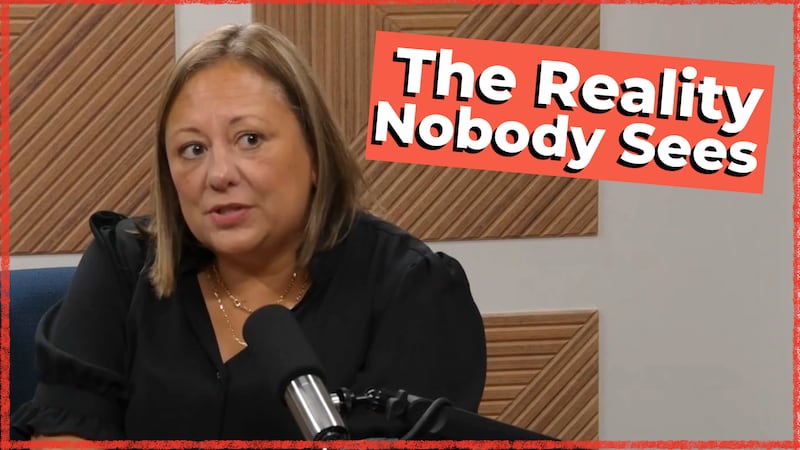
(Aging Untold) — In this episode of The Aging Untold Podcast, our experts unpack the friction that occurs when adult children try to step in and take over.
This episode challenges the concepts of “role reversal” and “once a man, twice a child,” arguing that older adults deserve support, autonomy and the right to define their own quality of life.
Discover how to balance safety concerns with respect for your parents’ independence.
“Parents don’t need parents”
As parents age, adult children might feel they need to “parent their parents,” which the Aging Untold hosts said undermines older adults’ dignity and autonomy.
That is further complicated when adult children think parents are making bad choices.
“Not even toddlers want to be told what to do, let alone our older parents,” aging well coach and Aging Untold co-host Katherine Ambrose said.
The Aging Untold hosts have suggestions on how to handle these conversations with respect and compassion.
Gerontologist and Aging Untold co-host Sam Cradduck said it infuriates her to hear the term “parenting parents.”
“Parents don’t need parents. They need support. They may need support, but they don’t need to be parented,” Cradduck said. “They don’t need you jumping in and trying to control everything.”
Aging expert and Aging Untold co-host Amy O’Rourke shared a similar sentiment over the phrase “role reversal.”
She recalled slipping into the role of telling her father what to do and how he reacted.
“Later on, he looked at me, and he goes, ‘You know, you’re being really bossy,’” O’Rourke said. “He gave it back to me.”
O’Rourke said she just got impatient and reverted to telling him what to do.
“But it was offensive,” O’Rourke said.
“We don’t become children again”
Cradduck also pushed back on the phrase “once a man, twice a child.”
“You want to make my blood boil? Tell me that, because we do not age backwards,” Cradduck said. “We go one direction, and then we go to our final sunset. We don’t become children again just because we need help.”
Collaboration over control
Falling into a role in which a caregiver tries to control the aging parent’s behavior is likely not out of malice but out of their frame of reference for providing care, often learned from raising children or caring for younger relatives.
Board-certified physician and Aging Untold co-host Dr. Rhea Rogers pointed out that adult children are often being protective and don’t know where the line is between being protective and parenting.
The way we communicate is key.
“Both generations involved need to learn how to communicate with each other,” Ambrose said.
And O’Rourke urged people who tend to want to get something done on a certain timeline to let that timeline go.
“Allow for some empathy and flexibility, and be in a place that you don’t have 10 other things to do so that you can really be where you are,” O’Rourke said.
Decisions versus bad decisions
So, what happens when older adults make choices their caregivers consider harmful?
Cradduck argued that the definition of a “bad decision” is subjective and that resistance to caregiver input is often a response to feeling controlled.
A “bad decision” is one thing while an addiction is another.
There are distinctions between individual decisions — such as a diabetic eating cake — and broader patterns like addiction, according to Rogers.
Cradduck pointed out that adult children often act from a place of prioritizing a parent’s quantity of life over quality of life.
“So frequently, our kids, they want to keep us. They’re not ready to lose us, and so they’re going to choose quantity over our quality,” Cradduck said.
Ambrose said older parents are often trying to maintain autonomy and make their own decisions.
The solution might be in compromise – like a smaller piece of cake.
“It’s quality versus quantity, and you don’t get to determine what my quality is,” Cradduck said.
Copyright 2026 Gray Media Group, Inc. All Rights Reserved.