From foster care to adoption: Both governor candidates have personal stakes as Ga. system fractures
ATLANTA, Ga. (Atlanta News First) — More than 30 licensed youth facilities have closed their doors across Georgia this year, leaving the state’s child welfare system strained and hundreds of traumatized teenagers in limbo.
At specialized residential campuses like Murphy-Harpst Children’s Centers in Cedartown, providers are fighting to stay open amid escalating operating expenses and flat state reimbursement rates.
Clinicians call ages 15 to 17 the “crossroad age”—the final, critical window where caring adults work to prepare teenagers for adulthood before state foster care ends at age 18.
For 18-year-old Carlee Corbin, the campus served as an essential safety net after her support system collapsed. Placed into foster care at age 8, Corbin believed an adoptive family had provided her with a permanent home, until that family gave her up when she was 16.
“That still hurts me to this day, because why would a family, you know, give you up?” Corbin said. “I thought I was going to, like, be there forever, you know? But sometimes, not everything goes as planned.”
Corbin found a lifeline through Murphy-Harpst’s transitional living program, where counselors assist her with life skills, emotional healing and job applications. Between counseling sessions, she channels her experiences into painting and writing original music, drawing inspiration from the artistic dreams her biological mother was never able to fulfill.
According to legislative testimony presented to the General Assembly’s Joint Study Committee on Evaluating Escalating Costs in Georgia’s Foster Care System, private child-placing agencies and residential facilities face severe financial headwinds. Commercial liability insurance premiums for foster care providers have jumped an average of 163% since 2019, while the baseline state per diem for teenagers increased by only about $5 over the past six years.
Murphy-Harpst President and CEO Michael Scott Merritt said the state reimburses the center for roughly 80% of its operating costs, forcing the facility to raise the remaining 20% through private charitable donations.
“Funding is the key,” Merritt said. “Until we get the funding, it’s going to continue to be chaotic. We’re going to continue to have kids moving from one place to another. We’re going to continue to have kids have to go into hotels.”
Merritt pointed to the recent closure of KidsPeace, an 80-bed residential facility in nearby Bowdon, Georgia, as an example of the capacity crisis pushing more foster children into commercial hotels and emergency placements.
Chief Clinical Officer Dr. Edward Valentin said Murphy-Harpst provides 24/7 specialized care, including sensory suites and crisis interventionists, to stabilize youth who have survived severe abuse, neglect and chronic trauma. Valentin warned that failing to invest in therapeutic treatment up front shifts the burden onto other public institutions later.
“We are not providing the solutions that we are going to continue to pay for as a state later on,” Valentin said. “Where do they end up? They do end up in our emergency services system. They do end up in our judicial system.”
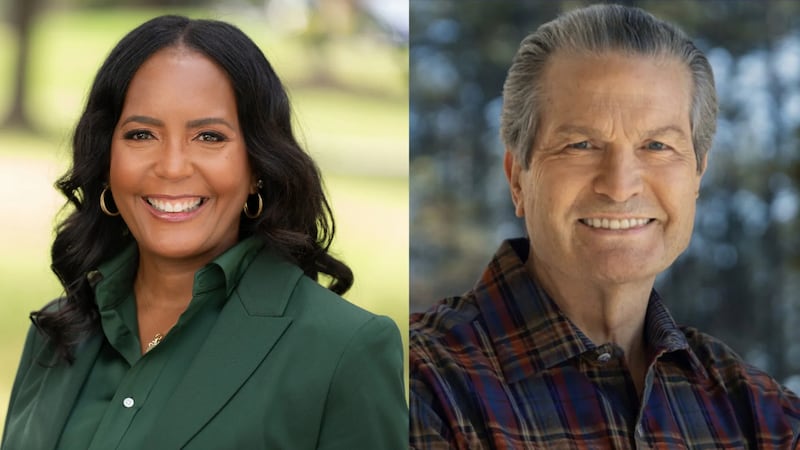
Leadership at the facility is looking toward the upcoming November election for systemic relief. Both major candidates running for Georgia governor share rare, personal ties to the child welfare system.
Republican nominee Rick Jackson, who spent six years in Georgia foster care as a child, has pledged an executive order to end the practice of housing foster children in hotels, expand tax credits through the Fostering Success Act, and empower private and faith-based providers.
Democratic nominee Keisha Lance Bottoms, who built her family of six through the adoption of four children, has vowed to protect Medicaid funding for behavioral health, lower adoption barriers and fees, and address frontline caseworker caseloads.
For Corbin, having a community of adults who believe in her future has reshaped how she views her potential.
“It makes me feel like I could be something. And I could go somewhere with it, you know. Everybody’s telling me that I’m going to be a star, but, you know, I’m trying to find my music still,” Corbin said.
The legislative Joint Study Committee on Evaluating Escalating Costs in Georgia’s Foster Care System is scheduled to submit its final policy and funding recommendations to the General Assembly by Dec. 1. Both gubernatorial candidates have pledged that reforming the Division of Family & Children Services will be a primary focus when the next administration takes office in January.
Copyright 2026 WANF. All rights reserved.